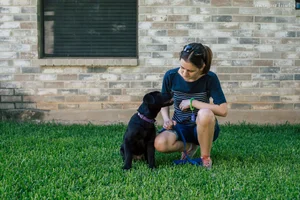
How to Be a Good Neighbor to a Reactive Dog
Reactivity is a pretty common problem for American dogs. Chances are good that you or someone you know has a dog that barks or lunges at something during their walk. Maybe you even live on the same street or in the same building as several struggling dogs.
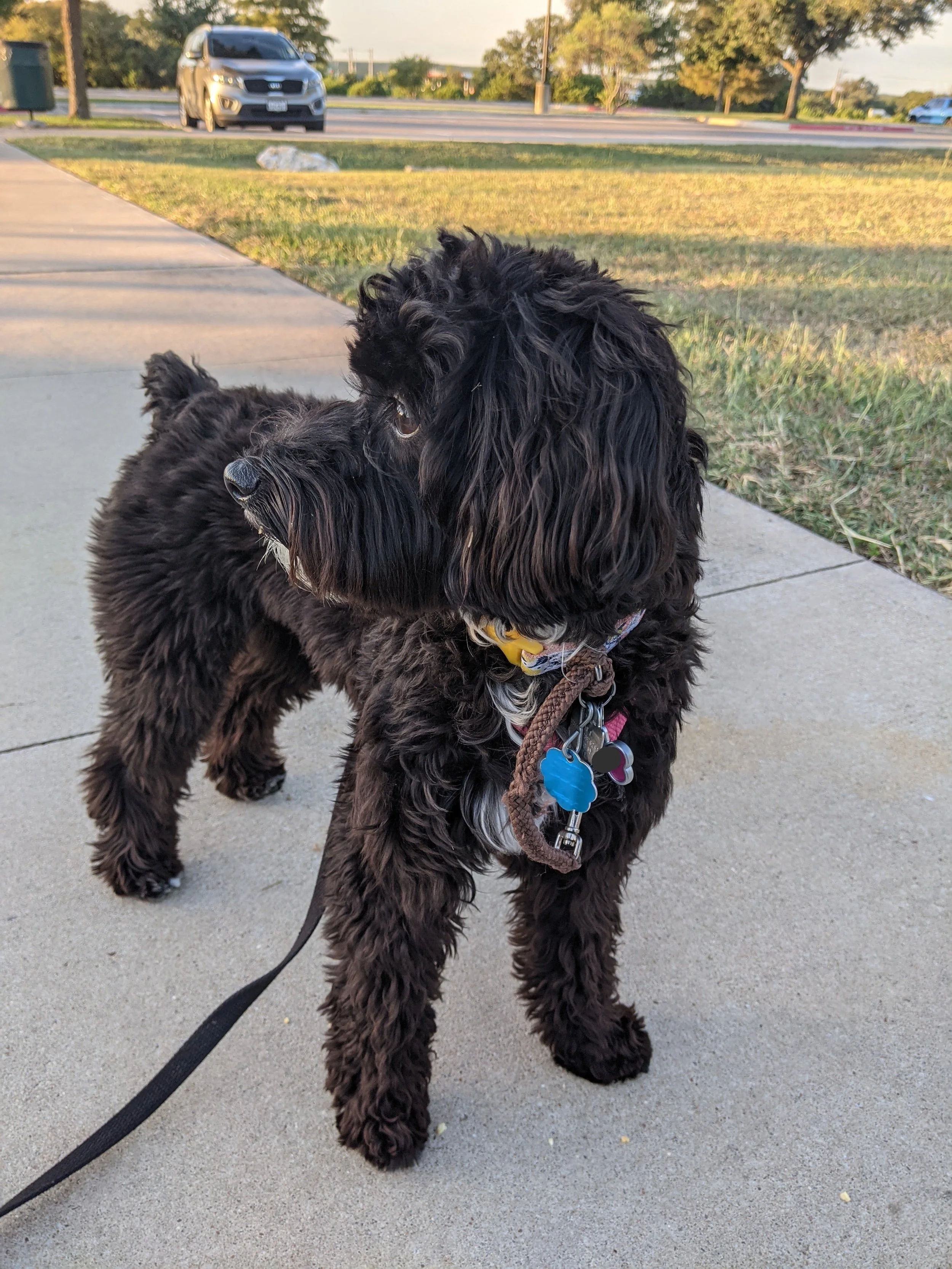
Living with a reactive dog can be easier when the community knows how to help!
I have worked with a lot of reactive dogs, and while training is doable, it has unique challenges. Unlike behavior problems at home, training for reactive dogs involves getting out into an environment where the chances of failure are greater because we can’t control as much.
While we work really, really hard to prevent the dog from rehearsing the barky, lungy behavior, sometimes owners need help from the community to make it happen — or not, as the case may be.
If you live near a reactive dog, here are three things you can do to help your neighbor as they’re helping their dog succeed.
#1: Give Them Space
This is one of the most helpful things you can do! If you know your neighbor’s dog struggles, or you see a dog struggling, do not approach. In fact, add distance if you can by crossing the street, or waiting for them to pass.
Years ago, I was working a reactive dog at a large park. She was having a really hard time and even though I was actively working to stay away from other people, one of the park-goers approached us and continued approaching us.
I understand people wanting to help, but you do not make friends with reactive dogs by getting closer and letting them smell you. This makes everything worse.
Reactive dog owners need your help. Giving as much space is possible enables them to facilitate the good encounter that improves their dog’s behavior. Let them decide when to move closer; not the other way around.
#2: Give Warning
If you live next door to a dog who likes to get into screaming matches with your dog along the fence line, a text to your neighbor, prior to letting your dog out in the backyard, is greatly appreciated!
That gives your neighbor time to take her dog inside, or be ready to use the opportunity to train.
#3: Observe Leash Laws
Some dogs are reactive because they have been scared or injured by off-leash dogs in the past. Those events can leave both ends of the leash with a lot of trauma that makes it really hard to get back outside again.
Even if your dog is super friendly, you can care for your neighbor by maintaining physical control of your dog at all times — including in your front yard.
#4: Just Ask
If you do those three things, your neighbor will be so appreciative!! But you don’t have to stop there. If you get a chance, ask your neighbor if there’s anything else you can do to help their training process.
There’s a whole lot in the world your neighbor cannot control, and it can make it really hard for her and her dog. But you can do a lot to make things better!
Need Help With Your Reactive Dog?
Leighann offers in-home dog training programs for dog-reactive dogs in the Austin, TX area. Let’s turn those triggers into triumphs!
Meet the Dog Trainer and Blog Author
Leighann founded Koinonia Dogs in 2014 and has been a Certified Professional Dog Trainer in the Austin, TX area since 2019.
She's a problem-solver by nature and loves creating cooperation through conflict-free communication so both ends of the leash enjoy life together.