Crating and Punishment
“Don’t use the crate to punish your dog or puppy.”
Many owners have heard this bit of instruction, but what does it actually mean?
Should you not crate the dog when you’re angry?
Or not crate the dog right after he’s done something wrong?
Is the dog the only one who can decide it’s crate time?
Making sure your dog feels good about his crate is a very good thing. I’m glad owners are concerned about this! We want dogs to happily enter their crates and feel safe inside.
But sometimes owners underutilize the crate because they are worried about making it a bad place.
By clearing up a couple of misconceptions about avoiding punishment with the crate, I hope owners will have the freedom to use the crate in a way that makes life easier and more successful for both ends of the leash.
TRUTH #1: You, the human, can initiate crate time without making the crate a bad or punishing place.
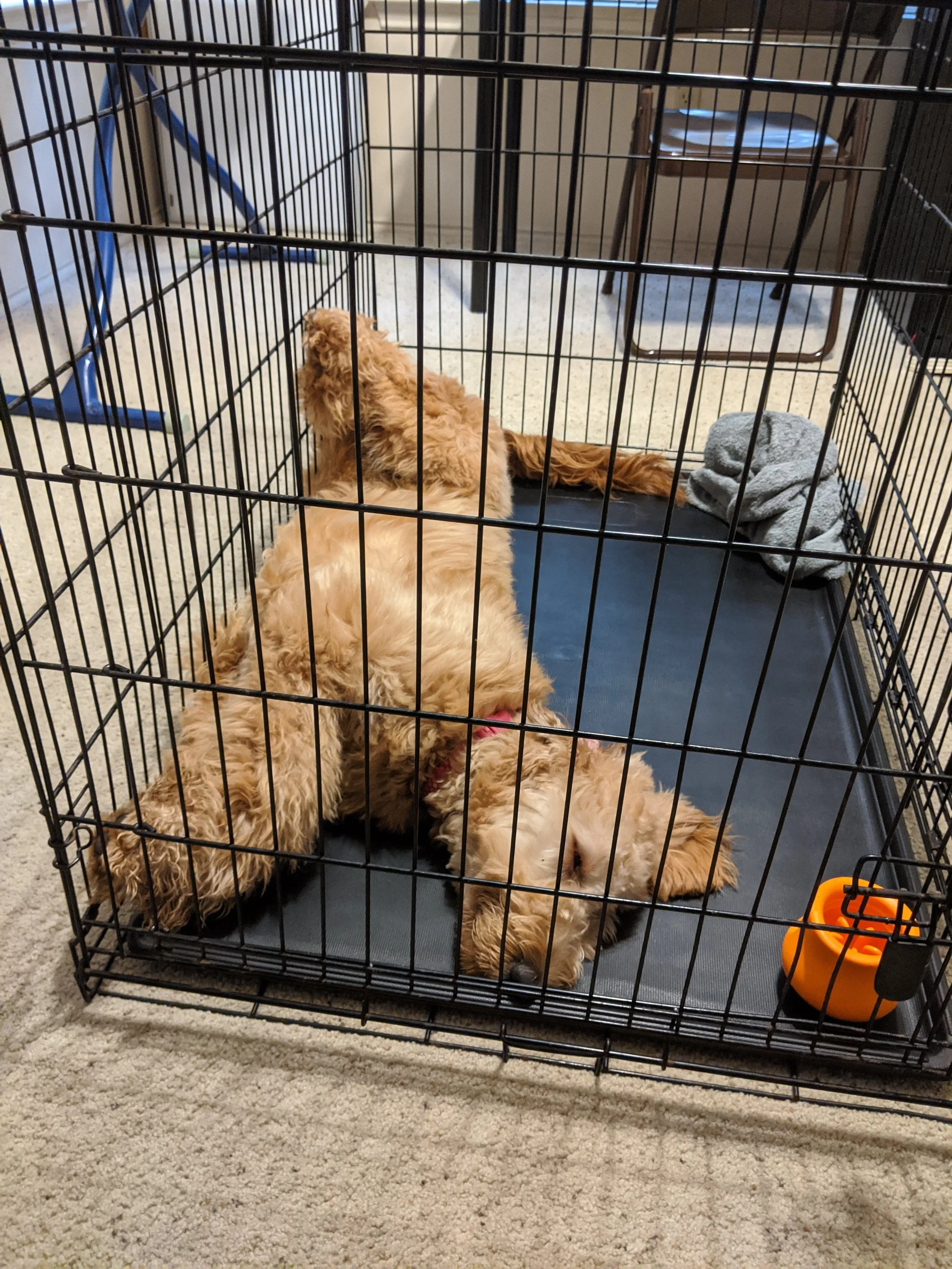
Rosebud catching a snooze in her crate.
The crate doesn’t automatically become bad just because it was the human’s idea or decision.
It can become bad from that point if the human forces the issue when the dog is clearly uncomfortable, but it isn’t automatically bad.
In fact, if the human initiates crate time as part of good training time, it can actually make the crate a very good place!
When I initiate crate training games with puppy Roscoe, it’s my idea but it’s all fun for him.
Initiating crate time can also prevent your dog from engaging in behavior that would call for punishment - and that’s a very good thing all around!
If I crate the dog before answering the door, he cannot jump on the plumber.
If I crate the puppy before he crashes from exhaustion, he cannot come unglued and start biting everyone and everything because he’s overly tired.
Proactively crating as part of an overall training plan that includes adequate and appropriate mental and physical stimulation helps both ends of the leash experience more success and less frustration.
TRUTH #2: You can crate your dog in response to his bad behavior without making punishment your training plan.
Sometimes stuff happens that you didn’t foresee.
Sometimes your teenage dog gets so worked up that he is not making good choices.
Sometimes your rowdy dog counter-surfs and knocks the jelly jar onto the floor sending sharp glass and sticky goo flying. (Yes, that has happened to me.)
There’s a difference between a damage control choice and a training plan.
Crating the dog to keep his paws safe while I clean up the consequences of his counter-surfing is different than hauling him off to the crate every time he puts his paws on the counter.
Prevention is a huge part of my training philosophy, but that doesn’t mean we don’t have Oopsie moments. And sometimes the right response to an Oopsie moment is to crate the dog so both parties can collect themselves.
Meet the Dog Trainer and Blog Author
Leighann founded Koinonia Dogs in 2014 and has been a Certified Professional Dog Trainer in the Austin, TX area since 2019.
She's a problem-solver by nature and loves creating cooperation through conflict-free communication so both ends of the leash enjoy life together.