Why I teach Eye Contact
The Dream Dog
Are you impressed with those picture-perfect patio dogs who rest quietly under the table and barely stir when the waitress approaches?
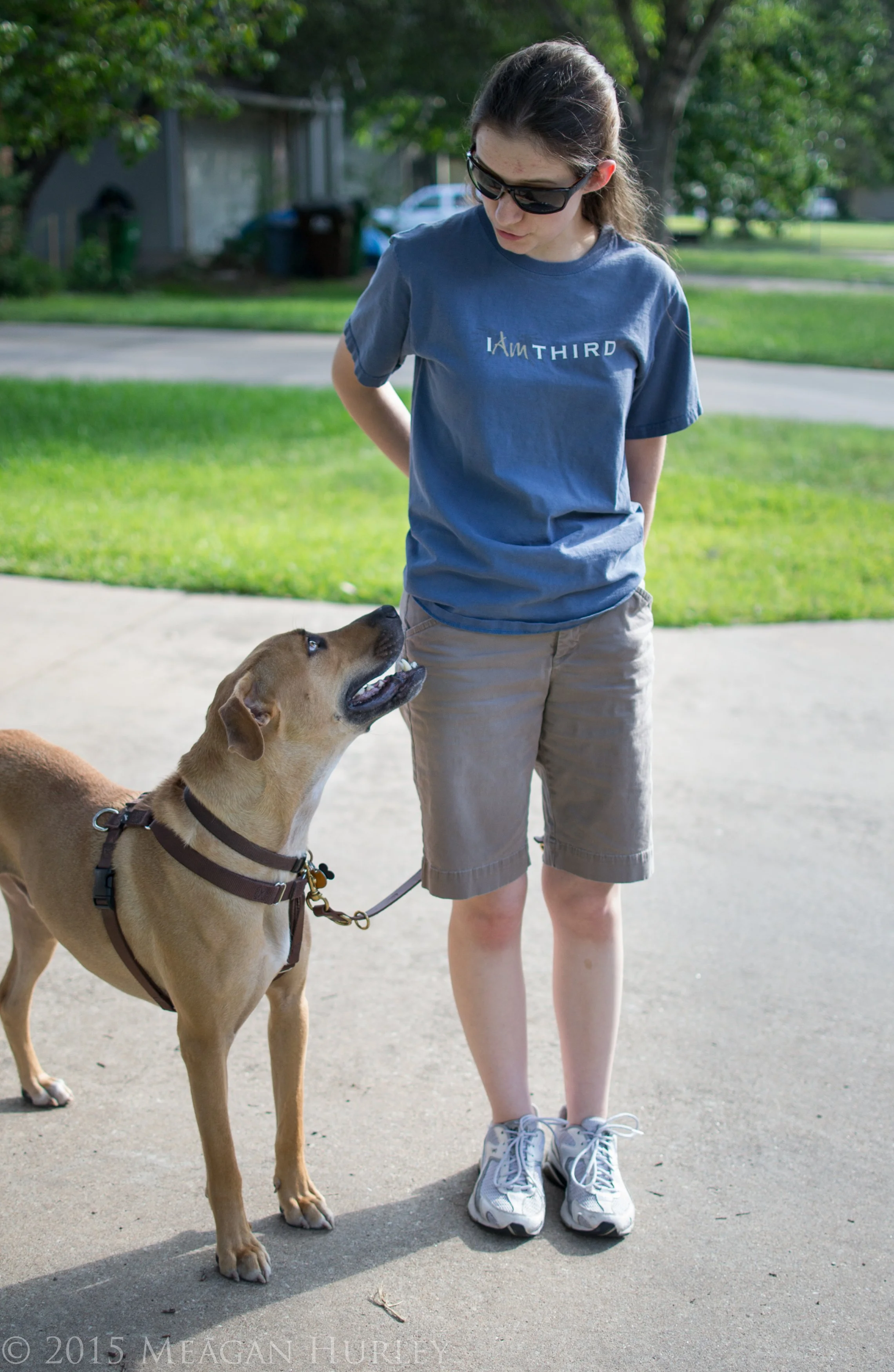
Eye Contact is a tiny, but mighty, skill for well-behaved dogs.
Do you stand in awe of the dogs who walk calmly past the neighborhood Fence Barkers without losing their cool?
Or maybe you don’t care about all that fancy stuff.
You just desperately wish your dog could be more like Cousin Sally’s dog and keep four-on-the-floor when guests arrive!
The Reality
Most of the dog owners I work with want their dog to behave in the Real World — whether that’s their own home, around the neighborhood, or at their favorite outdoor cafe.
They may have had some success getting their dog to listen when they’re alone, but as soon as someone else arrives or they step out the front door, things fall apart.
They cannot get their dog to pay attention and listen around distractions when it really counts.
Where I Start
Eye Contact — specifically, volunteered Eye Contact — is a key ingredient to solving this Real World problem.
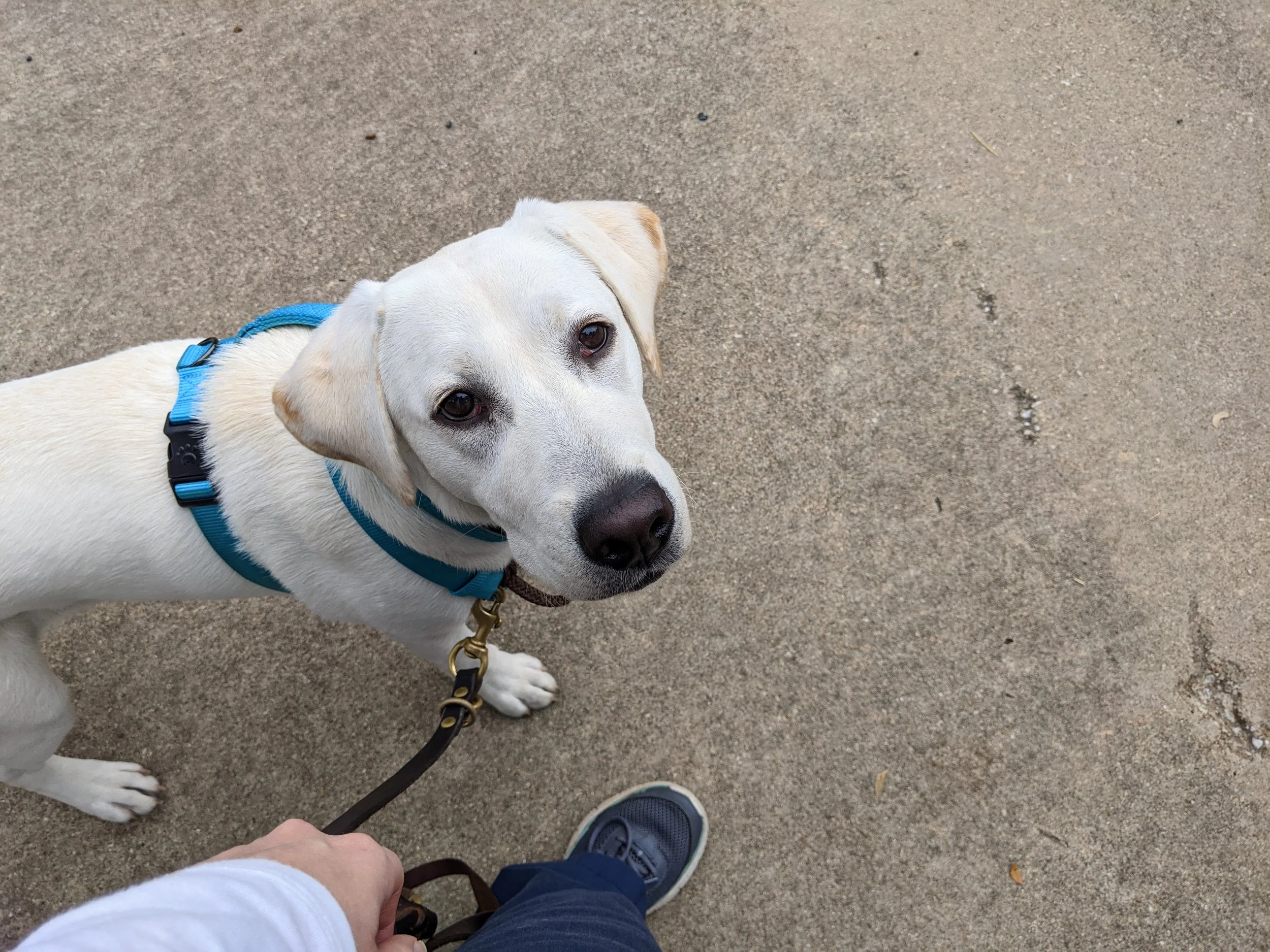
Eye Contact from your dog is a beautiful thing!
It’s not a flashy behavior.
It doesn’t make for good TV.
Sometimes owners don’t immediately see how it relates to their practical needs.
But trust me: it is a prerequisite for just about any well-behaved, well-trained dog.
Why is Eye Contact So Important for Your Dog’s Training?
The Real World we need our dogs to behave in is filled with distractions:
Amazon making a delivery
the neighbor walking their dog
landscapers mowing and blowing
your grandkids coming to visit
that darned squirrel who loves to taunt your dog
The list could go on and on.
Regardless of what you want your dog to do (and the specific distractions that stand in your way) good behavior ultimately boils down to your dog saying “no” to all those distractions and “yes” to you.
Eye Contact is a micro version of that.
When your dog looks at you, he’s saying “yes” to you and “no” to everything else.
Eye Contact is the tiny, but mighty skill your dog can do instead of being distracted and...
jumping on your guest
chasing the deer
scarfing up the chicken bones under the picnic table
dragging you to his favorite fire hydrant or bush
The BIG Real World
For the past three years, I’ve had the immense privilege of working with a family who is training a service dog for their child. Some of the most impressive and “well-behaved” things that dog does are keeping his feet still and looking at his people.
That’s it.
To anyone watching, it doesn’t look fancy.
It’s not exactly complicated to teach.
It’s just a couple of foundation skills practiced over and over and over again so they work in extremely distracting places like HEB or the Farmers’ Market.
Your dog may not be a service dog who needs to so well-behaved he’s practically invisible, but Eye Contact is still a powerhouse skill that helps your dog listen even around distractions.
Meet the Dog Trainer and Blog Author
Leighann Hurley founded Koinonia Dogs in 2014 and has been a Certified Professional Dog Trainer in the Austin, TX area since 2019.
She's a problem-solver by nature and loves creating cooperation through conflict-free communication so both ends of the leash enjoy an easier life together.